

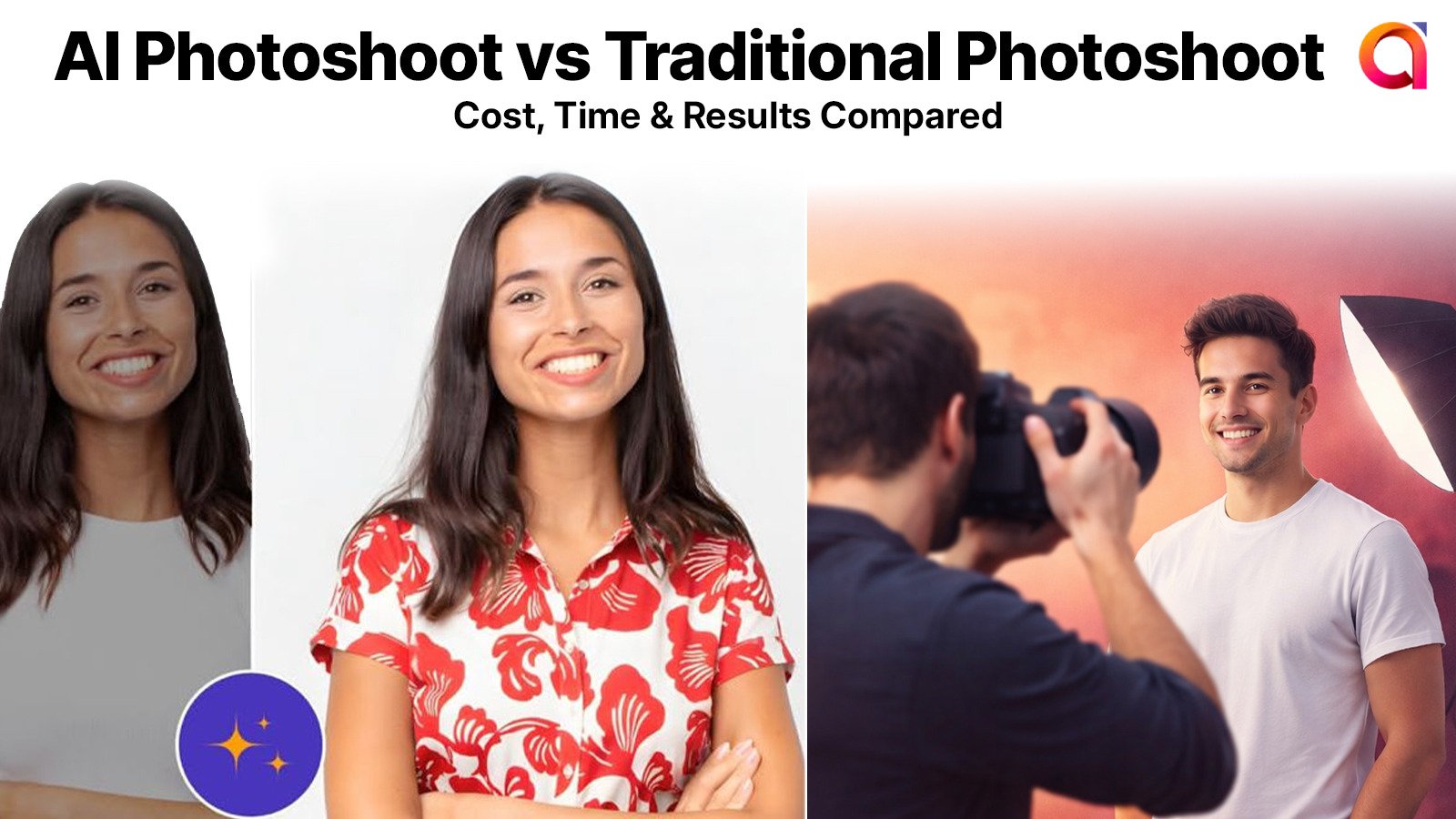
A single product launch can now be decided by one question: do you book a studio or build it digitally? Luxury fashion brands are rethinking how visuals are produced as AI photoshoots challenge the cost, speed, and limits of traditional photography. What once took weeks, large crews, and heavy budgets can now be created in days. Deciding between an AI photoshoot vs traditional photoshoot is not only about creative preference. It is a strategic decision that impacts margins, timelines, and sales performance.
What is a Traditional Photoshoot?
A traditional photoshoot follows a similar flow for all brands, which has been used for decades. After a moodboard is made, physical samples are sent to the studio. From there, the photographer, stylist, lighting crew, models, makeup artists, and art directors all collaborate on set. Each and every pose, angle, and change in lighting would require setup time. And if re-touching is required, it would happen in post-production.
Traditional shoots have served the fashion industry for decades. They are excellent at capturing human expressions and authentic textures. However, they come with their fair share of constraints that make scaling difficult with modern ecommerce.
Features of Traditional Shoots:
- requires physical samples
- fixed environment and lighting
- limited scenery and outfit changes per day
- long rounds of planning
- high cost overall
What is an AI Photoshoot?
An AI photoshoot replaces physical production with digital generation. Products are recreated using 3D assets or reference images, then placed into photorealistic scenery using generative systems. At Advertflair, these products are brought to life by platforms such as Style AI and Glam AI.
Creative teams no longer have to build studios. They can easily create different shoot scenarios digitally. Changes in lighting, poses, angles, backdrops, models, or fabrics can all be done within minutes using the software. You can avoid the pressure of re-shoots.
Features of AI Shoots:
- physical samples are not required
- consists of only digital models and environments
- fast conceptualization
- scalable output
- cost is predictable and affordable
The modern-day approach of opting for generative AI photoshoots is important and better for luxury and DTC brands.
Cost Comparison: Traditional vs. AI Shoots
Cost is generally the first deciding factor in a traditional photoshoot vs AI.
Traditional Photoshoot Costs
A single shoot can include:
- Studio rental
- Photographer and assistants
- Models and agency fees
- Stylists, makeup, and hair
- Set design and props
- Logistics and sample shipping
- Retouching and revisions
Budgets often reach six figures for global campaigns. Even smaller eCommerce shoots carry high fixed costs. Any revision usually means additional spending.
AI Photoshoot Costs
AI-based production removes many physical expenses. There are no studios, models, or shipping delays. Once a digital product is created, it can be reused over numerous seasons and regions. Costs scale with volume, not logistics. A brand can produce hundreds of images for the cost of a single traditional shoot. This cost structure is one of the strongest benefits of AI photoshoot adoption for fast-moving retail teams.
Time Comparison: Speed vs Scheduling
Time-to-market now defines competitive advantage. There are major differences when we look at the times of a traditional shoot and that of an AI shoot.
Traditional Timelines
A typical shoot timeline looks like this:
- Pre-production planning: weeks
- Sample readiness: weeks or months
- Shoot day scheduling: dependent on teams
- Post-production: days to weeks
A single delay can push launches back. Seasonal drops suffer most under this model.
AI Photoshoot Timelines
AI production compresses timelines dramatically. Once assets are ready:
- Scene setup takes hours, not days
- Revisions happen instantly
- Multiple markets can be produced in parallel
For brands launching weekly collections or regional campaigns, this speed changes how content calendars work.
Results Comparison: Visual Quality and Control
The biggest question that remains is all about quality. Buyers want realism. Creative teams want control.
Traditional Results
Traditional photography captures real light and human emotion. It does a great job at hero campaigns and editorial storytelling. However, consistency becomes harder across large catalogs. Lighting shifts, model availability, and retouching styles can vary.
AI-Generated Results
Modern AI-generated photos vs real photos are harder to tell apart than most expect. Fabric texture, shadows, reflections, and fit can now reach photorealistic standards when built correctly. AI also gives great control to its users. It ensures perfect lighting across all images. Each photo has colour accuracy. You have a plethora of backgrounds to choose from. You can even take advantage of region-specific styling without having to put up with re-shoots.
Creative Flexibility: Fixed vs. Fluid
Traditional shoots finalise creative decisions for the shoot right at the beginning of the planning process. If any changes regarding alternating backgrounds or lighting come up, that usually means a re-shoot needs to be scheduled.
On the other hand, AI photoshoots are more fluid. Creative teams have the flexibility to test out different seasons, campaign moods, cultural settings, and platform-specific crops. This flexibility is great for A/B testing, personalisation, and marketplace requirements. It also decreases creative risks that could potentially come up.
Scalability for Global Brands
In today’s world, global retail launches happen at different locations at the same time. It no longer happens in phases. That amount of scale puts pressure on visual production. The speed, consistency, and coordination determine whether the launch is smooth or behind schedule.
Scaling traditional photos across markets means multiple shoots are required using local models and studios. It requires a lot of coordination, often leading to inconsistent results.
On the other hand, AI scales easily and instantly. You could easily generate content for tons of languages, regions, and platforms. This means AI photoshoot vs. professional photography is less about replacement and has more to do with efficiency at scale.
Which Is Better: AI Photoshoot or Traditional Photoshoot?
The answer depends on goals, not nostalgia.
If the goal is speed, scale, consistency, and cost control, AI wins. If the goal is a single emotional hero image, traditional photography still has value. For most modern retail operations, the real decision is how quickly teams adapt. Brands that depend purely on old production models often struggle to keep up with the new ones.
The future is hybrid, strategic, and data-led. Traditional photoshoot vs AI is no longer a debate about creativity. It is a discussion about relevance.


