

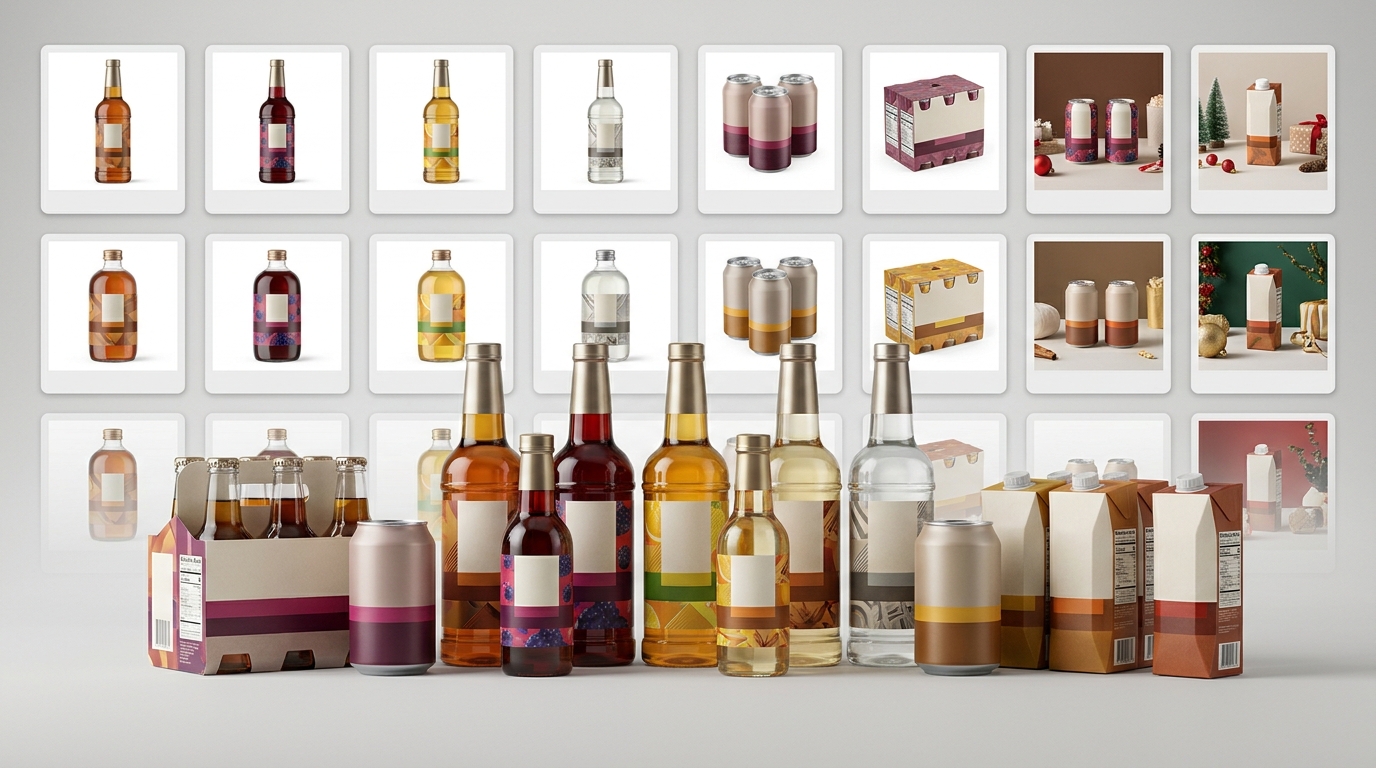
Quick context: Advertflair is the enterprise AI product photography and 3D platform behind 18 months of production at a $5B US retailer, beverage-syrup leader Torani's catalog imagery, the MBM Chairs 19-video animation program, and Crozier Fine Arts' Art Basel-tier visuals. This piece is about a problem that hits food, beverage, and CPG brands harder than almost any other category: a catalog where every flavor, pack size, and seasonal variant becomes its own product photograph. Model your catalog's photography cost in 60 seconds →
The CPG imagery problem nobody budgets for
A mid-market food or beverage brand doesn't have one product to photograph. It has a catalog: every flavor, every pack size, every seasonal variant, every retailer-specific bundle. A single line extension can mean dozens of new SKUs — and every one of them needs clean, consistent, on-brand imagery for the e-commerce shelf, the Amazon listing, the wholesale deck, and the retailer's planogram before it can sell. This is why CPG packaging photography at scale is one of the most underestimated line items in the category: the catalog grows by flavor × format × pack size × seasonal context, and imagery has to grow with it.
Traditional studio photography wasn't built for that cadence. Booking a studio, styling food, shooting, retouching, and delivering a few hundred SKUs runs into five and six figures and weeks of lead time — and the moment packaging changes or a new flavor drops, the meter starts again. For a brand managing 500+ SKUs, product imagery quietly becomes one of the largest recurring creative line items on the books, and it is the one that scales the worst as the brand grows. The strategic intent — more flavors, more formats, richer seasonal campaigns — is easy to approve. The operational tail, where someone has to produce a compliant, on-brand image for every cell in a multiplying matrix, is what breaks the studio model.
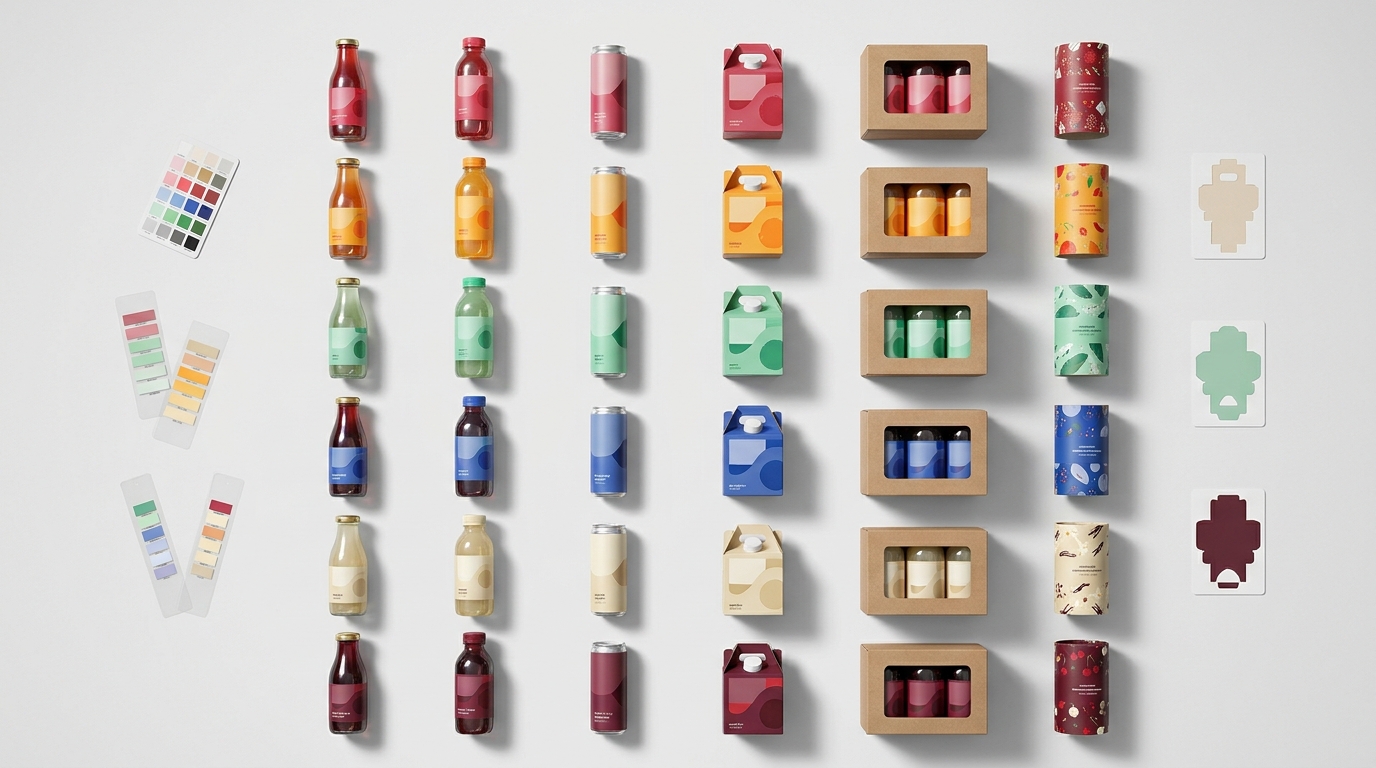
Why is food product photography so expensive at catalog scale?
A traditional studio prices per image, and three line items inflate specifically on food and beverage in ways lighter categories never face. Food product photography cost surprises teams because the per-image rate hides how fast the image count multiplies.
Styling and perishability. Food styling is its own craft, and many products are perishable, so a shoot is a logistics exercise in sourcing, prepping, and re-prepping product on a clock. Every flavor and format is a fresh setup, and none of it is reusable across the catalog.
Packaging fidelity under regulation. Food and beverage packaging carries labels, nutrition panels, ingredient lists, and regulated copy. The imagery has to reproduce all of it accurately, which means a studio re-shoots and re-retouches per packaging revision — and packaging revises constantly in CPG. Baymard Institute product-page research is blunt about why this matters: shoppers judge product quality primarily through imagery, and incomplete or inconsistent visuals are a leading driver of cart abandonment.
Seasonal and lifestyle scenes, built from scratch. The lifestyle shot — the beverage on a summer picnic table, the snack in a holiday spread — is what converts on the digital shelf, and it is the most expensive image in the catalog. Each scene means a location or built set, a stylist, and props, rebuilt for every campaign. McKinsey's retail and consumer-goods research has repeatedly shown how creative-services costs like these hide inside custom-quote pricing, where opacity favors the incumbent vendor.
What would your CPG catalog cost? →
Drop in your SKU count and current per-SKU rate. Get the all-in number, the AI-native alternative, and a CFO-ready PDF.
What AI product photography actually changes for food and beverage
AI-generated product photography flips the economics. Instead of paying per shoot, you train the system on your real product and packaging, then generate consistent, photorealistic imagery across the entire catalog — new angles, new backgrounds, new lifestyle scenes, seasonal contexts — on demand. The brand keeps full creative control: the can, the bottle, the label, the pack stays exactly true to the physical product, while the scene around it scales infinitely. This is the core of AI product photography for food & beverage brands, and it is a structurally different production model, not a cheaper version of the same shoot.
For food and beverage specifically, that means four things:
Packaging fidelity. Labels, nutrition panels, and brand marks render accurately, so listings stay compliant and recognizable. Because the pipeline is trained on your actual SKUs, the packaging is reproduced rather than reimagined — the distinction between a production-grade pipeline and a generic image generator.
Catalog consistency. Every SKU shares the same lighting, framing, and treatment, which is exactly what retailers and marketplaces reward on the digital shelf. Consistency stops being a per-image QA surcharge and becomes structural, because every image comes from the same Brand DNA model.
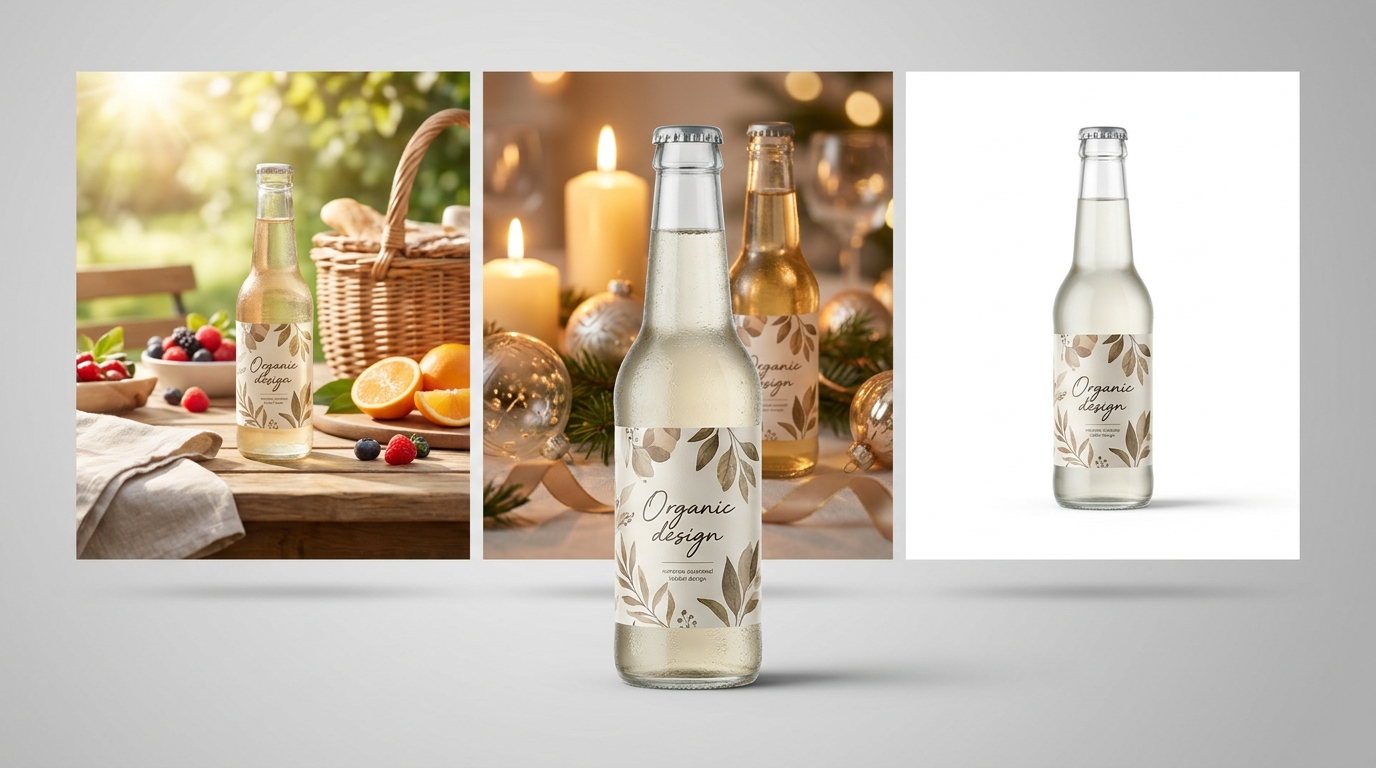
Seasonal and contextual variants. The same product in a summer-picnic scene, a holiday table, or a clean studio white, generated in hours, not weeks. Seasonal refreshes stop being budget events.
Cost structure. Typically around 70 percent under the equivalent studio spend — the difference between imagery being a bottleneck and imagery being a non-issue. The same Brand DNA engine spans catalog stills, 3D, and animation from one source and already runs in production across other catalog-heavy verticals — fashion and apparel and jewelry — while the AI Solutions hub shows how those outputs come off a single pipeline.
How do CPG brands photograph hundreds of SKUs affordably?
The structural insight behind catalog product photography at scale is that a matrix should be produced like a matrix — trained once, then multiplied digitally — not photographed cell by cell. A CPG brand trains an AI pipeline on its catalog once, building a customer-specific Brand DNA model that encodes the brand's exact standard: the lighting recipe, the framing, the styling language, and the precise rendering of every label and pack format. That is the one-time investment, and it is where the product and brand judgment lives. Then every SKU and every context renders through that single model.
The economics invert. Adding a flavor, a pack size, or a seasonal scene is a render, so the marginal cost of the 200th variant approaches the marginal cost of the 2nd. Reshoots collapse because packaging and styling are solved once in the model rather than re-shot per revision. For a brand running constant line extensions and seasonal campaigns, that is the difference between imagery gating a launch and imagery being ready before the launch is.
Proof, not promises
This isn't theoretical. We run AI product and packaging imagery in production for brands across food, beverage, and CPG — including Torani, whose beverage-syrup catalog spans dozens of flavors and formats, and a $5B reference retailer that uses our pipeline across its merchandising operation, where it held 98 percent texture accuracy against the retailer's own studio output over an 18-month engagement. The pattern repeats: the brands that win the digital shelf are the ones that can put consistent, high-quality imagery behind every SKU without blowing the creative budget. Brand-consistent product photography at scale is not a slogan in these programs — it is the metric production is built around, because a label that renders wrong is an image that can't ship.
Where to start without a big commitment
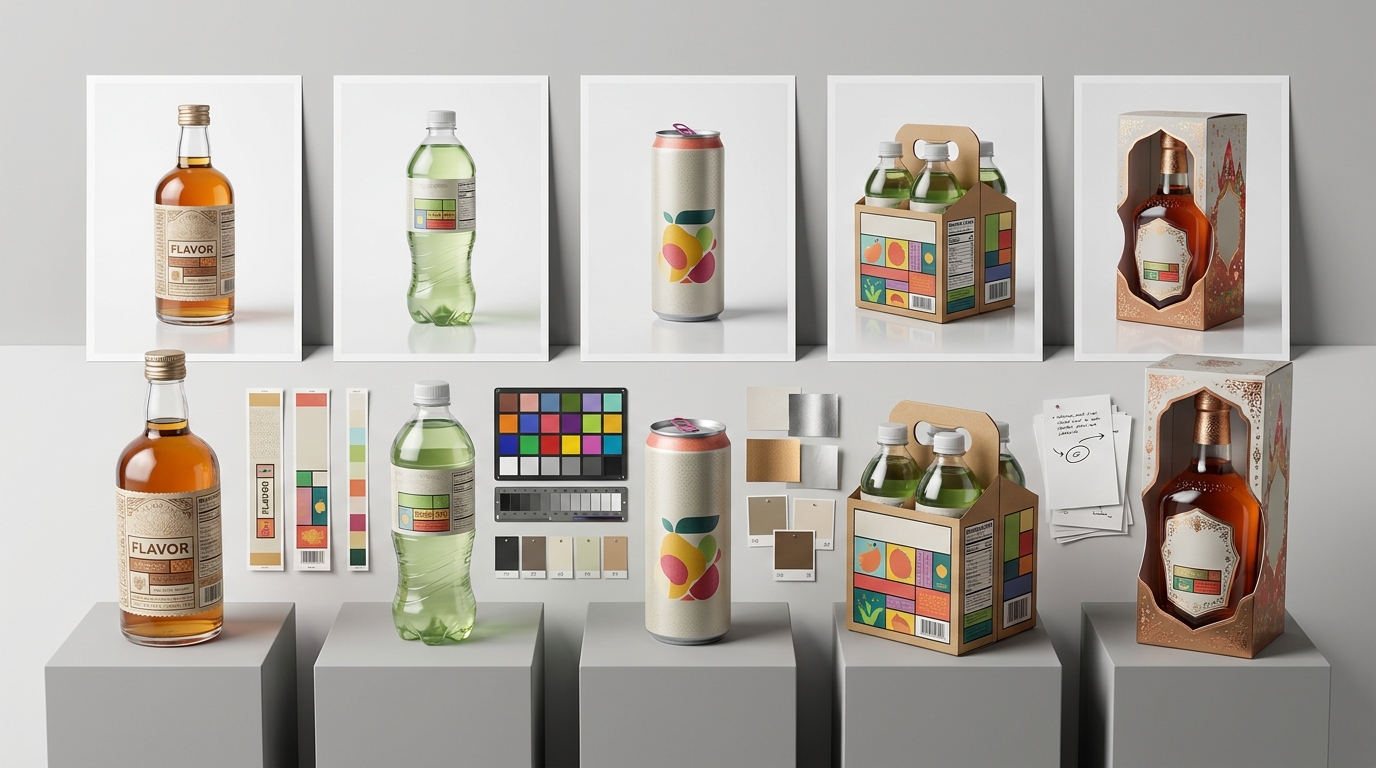
You don't have to migrate your whole catalog on day one. The fastest way to see whether AI product photography holds up against your real packaging is a small pilot: pick five SKUs — ideally your trickiest packaging and your hero seasonal scene — run them through the pipeline, and judge the output against your current studio work side by side. Validate fidelity on the SKUs most likely to fail, then scale the matrix with confidence.
Render your CPG catalog instead of re-shooting it →
Start a 5-SKU pilot on your hardest packaging and your hero seasonal scene. Prove the match on your toughest SKUs before you scale.
Frequently asked questions
How much does food product photography cost? Traditional studio food photography typically runs from a few hundred to over a thousand dollars per SKU once styling, shooting, and retouching are included, so a catalog of several hundred SKUs quickly reaches five or six figures plus weeks of lead time. AI product photography lowers that to roughly 70 percent under studio cost, and a 5-SKU pilot to test it on your real packaging starts at $499.
Can AI generate food and beverage packaging photography? Yes. The system is trained on your actual product and packaging, so labels, nutrition panels, and brand marks render accurately while the background, lighting, and scene are generated on demand — scaling across every flavor, format, and seasonal variant while keeping listings compliant and recognizable.
How do CPG brands photograph hundreds of SKUs affordably? Brands train an AI pipeline on their catalog once, then generate consistent imagery for every SKU and context at a fraction of per-shoot cost. The result is uniform lighting and framing across the whole catalog — what marketplaces and retailers reward — with a $499 5-SKU pilot as the entry point.
Is AI product photography accurate enough for food packaging compliance? Yes, when the pipeline is trained on the real packaging. Product, label, and brand marks are reproduced from your actual SKUs rather than reimagined, so nutrition panels and regulated copy stay faithful while only the scene around the product is generated.
Can AI create seasonal and lifestyle imagery for beverage brands? Yes. Once a product is modeled, the same can or bottle can be placed into a summer-picnic scene, a holiday table, or a clean studio white in hours rather than weeks, with no new shoot — so a brand refreshes campaign imagery every season without re-shooting the product.
Hari Gurusamy
Founder & CEO, Advertflair (DBA Vela Studio, Glam AI, Style AI)
Hari founded Advertflair in 2016 and led the pivot from a 145-person 3D services firm to a 25-person enterprise AI product photography platform. The Brand DNA engine he and the team built has run in production at a $5B US retailer for 18 months, on Torani's beverage-syrup catalog imagery, on the MBM Chairs 19-video animation program, and on Crozier Fine Arts' Art Basel-tier visuals. Connect with Hari on LinkedIn.


