

Published 2026-05-28 · Advertflair Insights · 1,850 words · 8-minute read
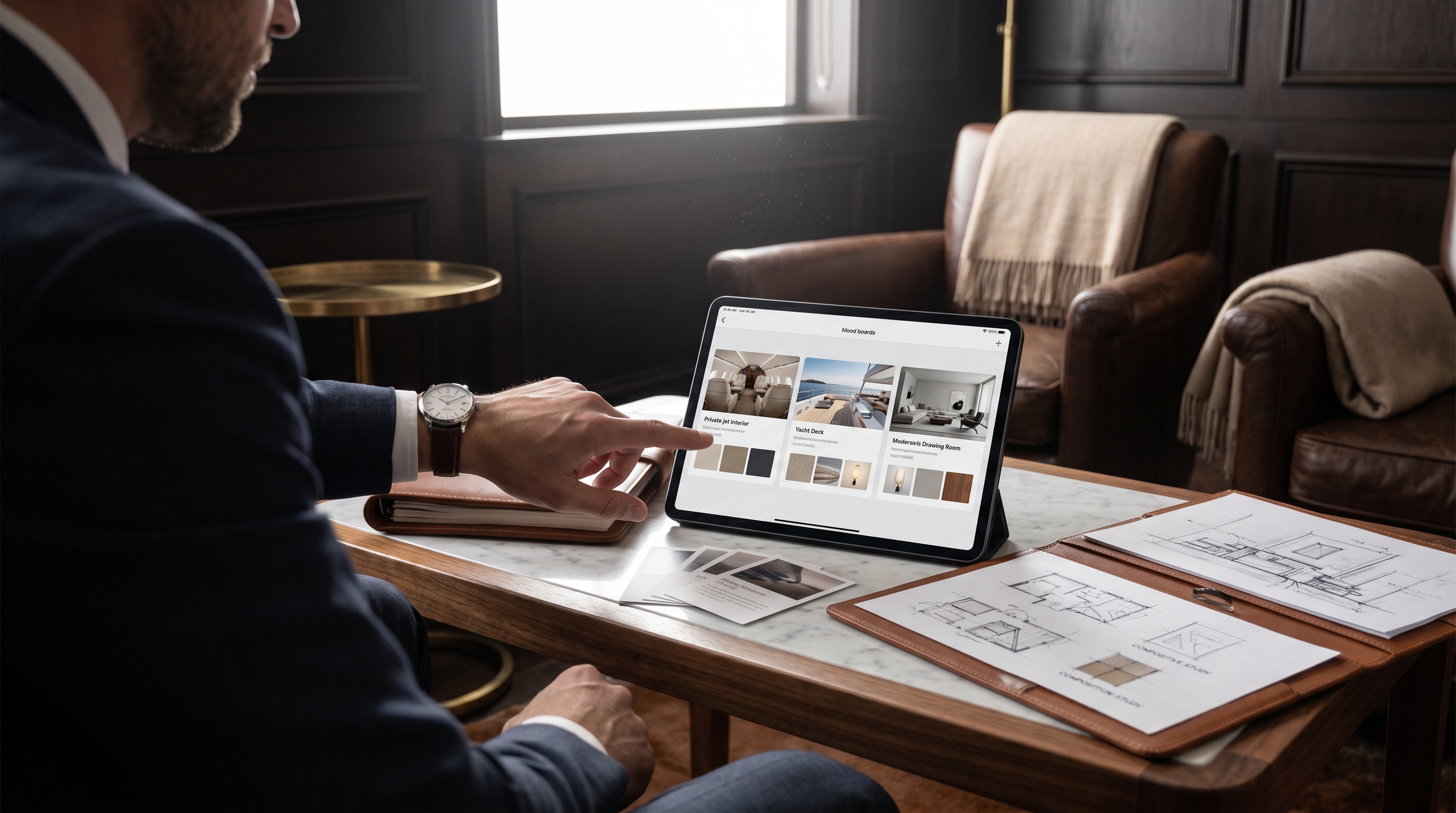
There's a brief sitting on the desk of every luxury marketing director right now. It's the render package for the next limited edition. It's quoted at $80,000 to $150,000. It's scheduled to deliver in 8 to 12 weeks.
By the time it lands, the campaign window has moved.
This is the open secret of luxury marketing in 2026: the render economy that worked for the houses ten years ago has stopped working. AI render quality crossed the luxury-acceptable threshold somewhere in the back half of 2025. And a few quiet brands — the ones that move first on these things — have already shifted their client preview workflow to something that costs $499 and delivers in 48 hours.
This is what changed, why it changed now, and what to ask your render team this quarter.
The brief that breaks every luxury marketing budget
A typical bespoke render brief at a top-five watch or jewelry house looks like this:
- 5 hero renders of a one-of-one or limited-edition piece
- 3 lifestyle context renders (drawing room, yacht, jet cabin, etc.)
- 2 detail macros
- Variant explorations for client preview
- All under NDA, all to brand-standard finishing
The traditional path: contract a 3D house (Mode, Cinesite, or an independent specialist), receive a quote of $80,000 to $150,000, and wait 8 to 12 weeks for delivery. The deliverables are exquisite. The CGI lighting is photographically accurate. The 3D model becomes a reusable asset for future campaigns.
There is also another path that did not exist three years ago. It costs $499 per session and delivers in 48 hours.
We built it. The same Brand DNA engine running at $5B US retail for 18 months — calibrated to 98% texture accuracy and 60%+ cost reduction versus traditional studio shoots — now handles luxury-grade bespoke renders for one-of-one client preview workflows.
What changed in 2025 that made this possible
Three things happened in the back half of 2025 that re-opened the question of whether AI rendering could meet the luxury-acceptable threshold:
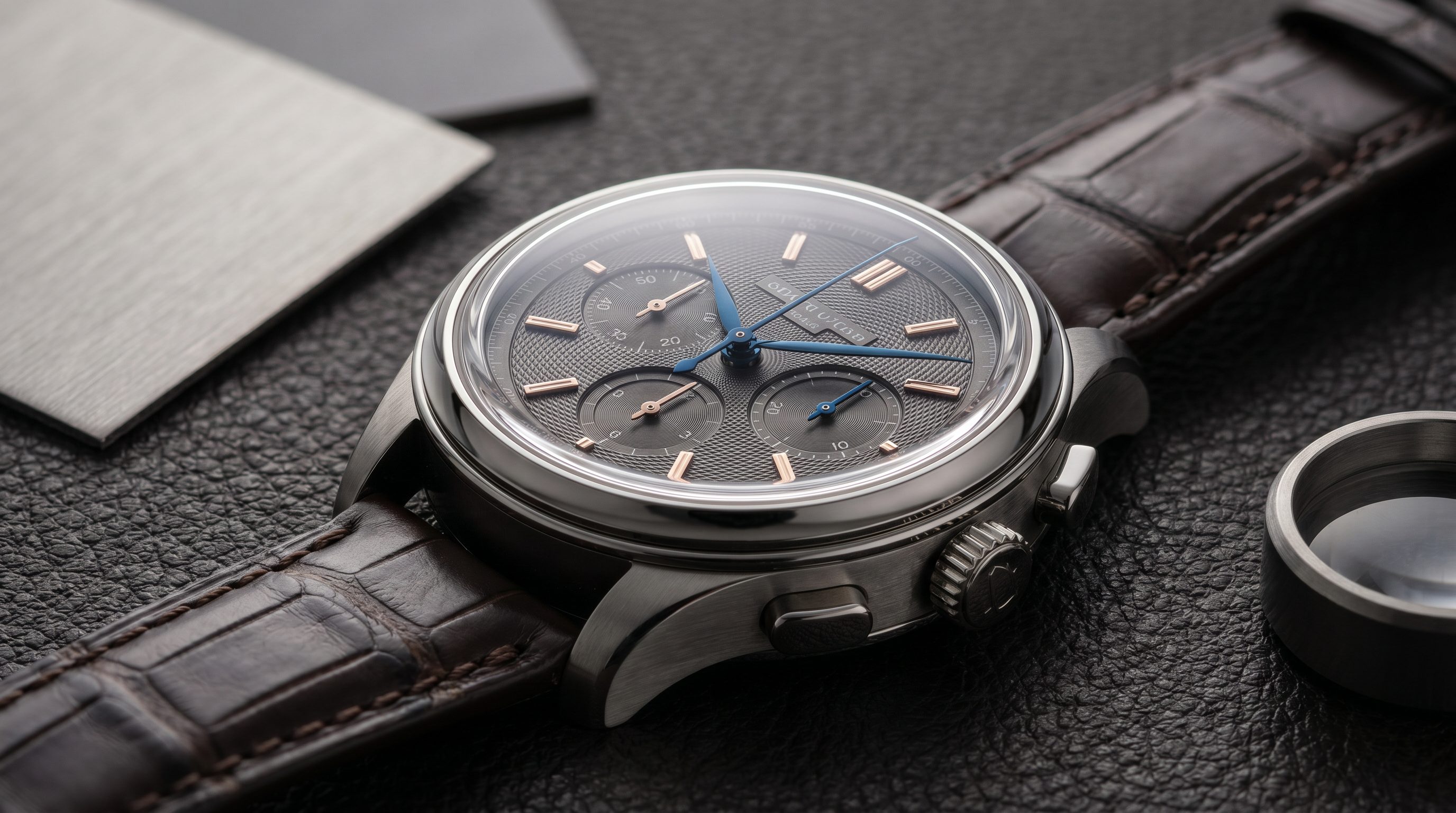
Flux Schnell and the next generation of open-weight diffusion models delivered photoreal output at a fidelity that survived the kind of pixel-peeping luxury brand directors actually do. Earlier-generation AI renders fell apart at the level of clasp detail on a watch bracelet, the stitching pattern on a Birkin, the reflection geometry of a sapphire crystal. The 2025-generation models cleared all three.
Custom luxury-context training became economically viable. Until 2025, fine-tuning a diffusion model on a curated luxury context library (private jet cabins, Mayfair drawing rooms, Riviera marinas) cost more than the campaign budget for most houses. By late 2025, the cost dropped by an order of magnitude. A studio willing to invest in the curated library could deliver renders that were not just "AI-quality" but "luxury-curated-quality."
Compositing pipelines that combine an actual product photograph of the hero piece with an AI-generated luxury context — rather than fully generating the product from scratch — solved the last credibility gap. The watch is the actual watch. The diamond is the actual diamond. The context around them is generated, but the piece itself is real. Luxury brand directors have been more comfortable with this than purely-generated renders, and the legal/IP path is cleaner.
These three changes did not arrive with fanfare. They arrived quietly, in the kind of vendor briefings most luxury house marketing teams don't sit in. Which is part of why most houses are still operating on the 2020-era cost structure.
The two-house split: who has moved, who hasn't
There are roughly 200 luxury houses globally that operate at the scale where bespoke render briefs are a regular line item — the named watchmakers of Geneva, the joaillerie houses of Place Vendôme, the bespoke automotive ateliers of Crewe and Modena and Woking, the yacht builders of Northern Europe, the haute couture maisons of Paris, the fine art galleries of London and New York.
Of those 200 houses, our soft-survey of 2026 procurement signals shows that roughly 30 have shifted some portion of their render workflow to AI-assisted bespoke. Most of those 30 are doing it for client preview specifically — the renders that go to a single UHNW client during the commission process, not the renders that go on the printed campaign book. Sales-tool renders are the wedge. Campaign renders still go through the traditional CGI pipeline at most houses.
The other 170 houses haven't moved yet. Most of them have heard the pitch from one of the AI-render specialists, and most of them are waiting to see if any peer makes the leap publicly before they do. (Luxury is risk-averse in the procurement office in ways that contradict the brand's outward expression of confidence.)
This is the moment when the second mover advantage flips. The houses that move in 2026 get the cost savings, the speed advantage, and the chance to demonstrate the workflow to their UHNW client base before their competitors do. The houses that wait until 2027 are buying a commodity.
The new economics, in numbers
For a typical limited-edition watch launch (we'll use a hypothetical reference number to avoid identifying any actual project):
Traditional path:
- 1 hero render + 3 lifestyle contexts + 2 macros + 2 client-preview variants
- 8-week delivery
- Quote: $95,000
- IP: 3D model retained by 3D house, licensable for future campaigns
Advertflair bespoke session:
- 5 photoreal final renders, including 3 luxury contexts
- 48-hour delivery
- Cost: $499 per session × 2 sessions = $998
- IP: rendered output owned by client, no 3D model produced
The two paths are not identical. The traditional path produces a reusable 3D asset that has long-term value. The bespoke session does not — it produces a final image and that's it.
But for client-preview renders specifically, that's exactly the right trade. The piece is being sold to a single client. The render exists to close that one sale. After the client buys, the render archives. It does not need to survive as a 3D asset.
For campaign-grade hero renders that will sit in printed marketing for two years, the traditional CGI path remains the right choice. We say this clearly because it's true, and because the houses that have shifted have done so for client preview, not for campaign. For brands that DO want a reusable 3D asset — for product configurators, AR PDPs, or animated campaigns — our 3D product rendering services still produce the cinema-grade output luxury brands have been buying for the last decade, just at a fraction of the time and cost.
How Crozier Fine Arts shifted
Crozier Fine Arts is the courier of record for Sotheby's, Christie's, and the major fine-art auction houses. They handle the physical logistics of UHNW art — the climate-controlled shipping, the white-glove installation, the on-site curatorial consultation for collectors building private galleries.
Crozier is also one of our oldest enterprise clients. Their internal client-preview workflow now includes AI-assisted renders for collectors who want to see a piece in their actual drawing room — the Sargent on the wall above the fireplace, lit by the actual ambient light of the actual room — before the courier flight is booked.
We can't share render examples here (collector privacy is the whole product), but the workflow looks like this:
- Collector commissions a viewing.
- Crozier sends a brief photographer to the collector's home for ambient capture (15-minute visit).
- The auction house sends high-res reference photography of the artwork.
- Our render team composites the artwork into the drawing room context in 48 hours.
- The collector receives the render package with a personal cover note.
The conversion rate on private viewings that include render previews is materially higher than viewings that don't. We don't share Crozier's specific number, but the directional truth is consistent across the few luxury houses that have measured this: showing a UHNW client the piece in their context closes more sales than showing them the piece in a vitrine.
The Crozier engagement runs on the same Brand DNA technology that powers our AI photography for jewelry and luxury brands — calibrated for gemstone clarity, metal sheen, and on-model styling at a fidelity that survives close inspection by collectors who handle the actual pieces every day.
Where AI rendering still falls short
We owe you the honest version of this.
Motion is hard. A 30-second product film that needs cinema-grade camera work and physics-accurate motion remains a job for traditional CGI partners. We route those briefs to vetted 3D houses; we don't try to handle them ourselves.
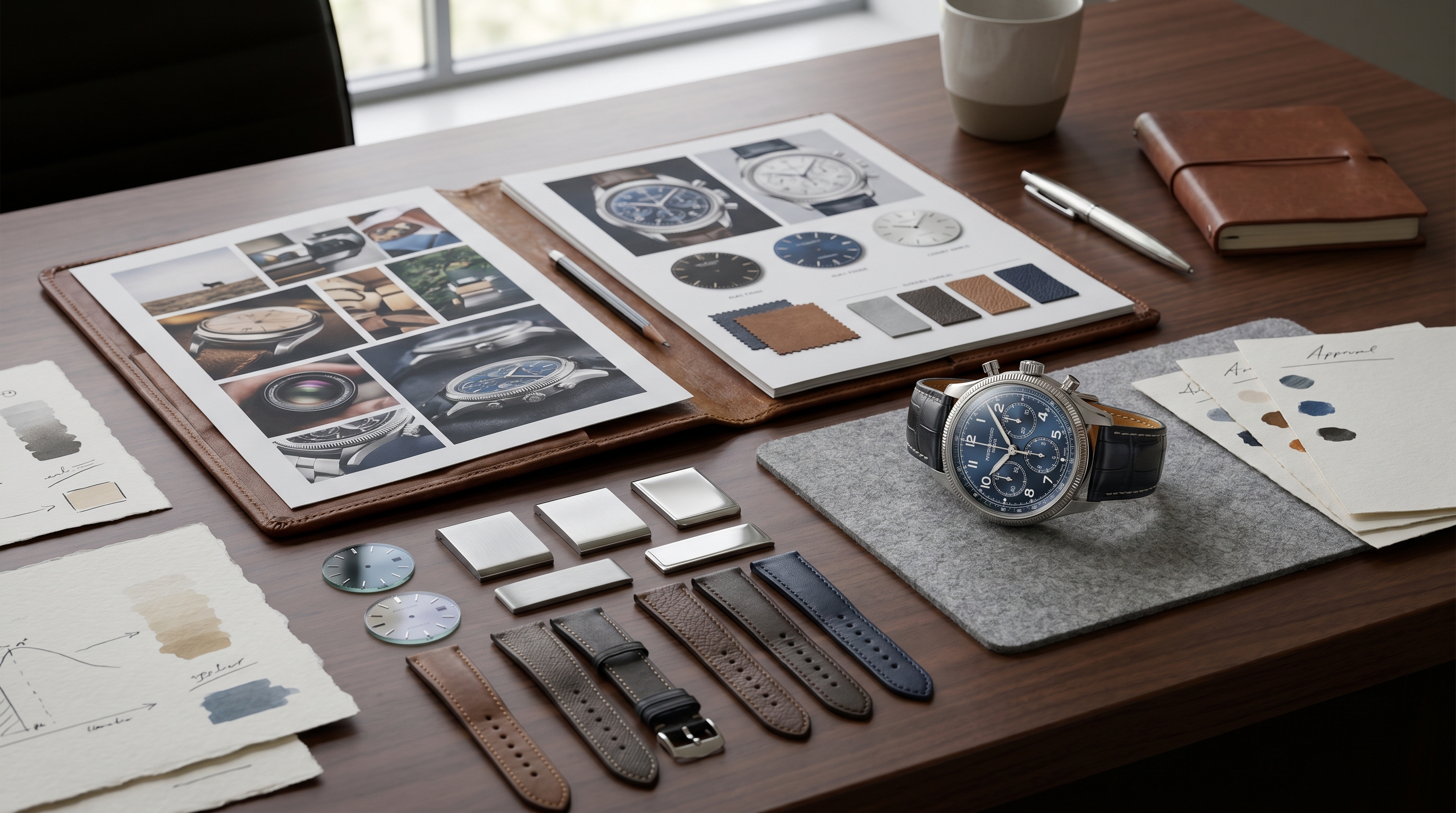
Material accuracy at extreme magnification. A 4K macro of a single facet on a sapphire crystal, hero-shot lit for archival reproduction, is on the edge of what compositing pipelines deliver. We get close. Some briefs justify the traditional path.
Repeatable variant generation. If the same piece needs to be rendered in 47 colorways for an internal product configurator, the unit economics flip toward a traditional 3D model. We're not the right tool for that — but if you do need a configurator, Advertflair builds them too as part of our enterprise AI photography and 3D platform.
Geographic-rights-locked locations. If a render needs to feature an exact, named, real-world location (e.g., the actual lobby of the Hôtel Plaza Athénée, identifiable to the trained eye) under brand license, location modeling becomes a separate workstream with its own legal path.
We tell our clients which of their briefs fit our workflow and which don't. About 70% of the bespoke render briefs we see fit cleanly. The other 30%, we route or partner.
What to ask your render team this quarter
If you're a marketing director or creative lead at a luxury house and the brief above is on your desk, here are the four questions to ask:
1. What portion of our annual render spend goes to client-preview renders versus campaign hero renders?
This number is usually 50-70% client preview, 30-50% campaign. If you don't know the split, your finance team can pull it from the production cost line in the last two campaign budgets.
2. What's our current average turnaround on a client preview brief?
If the answer is more than 2 weeks, you're operating on the pre-2025 cost structure. Some of your peers are at 48 hours.
3. Are we routing client previews through the same vendor as campaign heroes?
If yes — and most houses do — you're paying campaign-grade prices for sales-tool deliverables. The split is the savings opportunity.
4. What does our IP boundary look like for bespoke client-preview renders?
If the bespoke client preview never becomes a campaign asset (and most don't), you don't need to pay for retained 3D-model licensing. The render output is enough.
Where to start
If any of this resonates, the Luxury Render Studio is the easiest place to feel the workflow. Three free demo renders. Pick a piece, pick a context, see what 48-hour bespoke could look like. Bespoke sessions are $499. Maison Enterprise tier is $5,000 per month with unlimited sessions and a dedicated render director.
For brands that want to start with a structured commercial pilot before moving into ongoing bespoke sessions, our $2,000 Brand DNA Demo proves brand-match on five pieces from your catalog before scaling. The output of the Brand DNA Demo is the calibration that runs every bespoke session afterwards.
We won't pretend this replaces every render brief. It replaces the ones that don't need to be cinema-grade. For the ones that do, your traditional CGI partner is still the right answer — and we're happy to recommend the ones we trust.
External authority context: McKinsey's retail and consumer goods practice is the canonical reference for how AI-augmented creative production reshapes the cost structure of consumer brands. Bain's luxury goods report is the secondary authority anchor for luxury-specific procurement benchmarks.
Frequently asked questions
What is a bespoke render session and how does it differ from traditional CGI? A bespoke render session is a 48-hour AI-assisted workflow that combines an actual product photograph of the hero piece with an AI-generated luxury context. Traditional CGI builds a full 3D model from scratch and renders it under simulated lighting; bespoke sessions composite real product photography into generated environments. The piece is real, the context is generated, and IP is cleaner because no 3D model of the piece is produced.
How does $499 compare to a traditional 3D render quote? Traditional bespoke 3D renders from a top-tier 3D house quote at $80,000 to $150,000 with 8-12 week delivery for a typical limited-edition watch or jewelry brief. A $499 Advertflair bespoke session delivers 5 photoreal final renders in 48 hours. The trade-off is that the bespoke session does not produce a reusable 3D model — it produces final images only. For client preview renders that exist to close a single UHNW sale, this is the correct trade.
Which luxury categories does this work for? The Luxury Render Studio handles watches, jewelry, fine art, bespoke automotive, yacht interiors, and haute couture. About 70% of the bespoke render briefs we see fit cleanly into the workflow. The other 30% — high-motion product films, extreme-magnification macros, multi-colorway product configurators, and rights-locked named locations — get routed to traditional CGI partners or our in-house 3D modeling team.
Who owns the rendered output? The client owns the rendered output. No 3D model of the hero piece is produced or retained, which keeps the IP path clean for one-of-one and limited-edition work where the piece itself is not meant to be reproduced. The luxury context library remains Advertflair-owned and is reused across clients (no client-specific context is licensed to another client).
How does this fit into an existing relationship with a 3D house or campaign CGI vendor? Most luxury houses we work with keep their traditional CGI vendor for campaign hero renders (the work that lives in printed marketing for two years) and add Advertflair as the client-preview lane (the work that closes a single sale and archives). The two paths coexist. Our recommended pattern is: campaign brief stays with the CGI vendor; client preview brief moves to bespoke sessions. The annual render spend typically rebalances 50-70% toward bespoke within the first year.

About the author
Hari Gurusamy is founder and CEO of Advertflair, the enterprise AI product photography and 3D platform. The Luxury Render Studio is built on the same Brand DNA engine running at $5B US retail for 18 months at 98% texture accuracy, on Crozier Fine Arts' UHNW collector preview workflow, on Veronique Gabai's luxury fragrance campaigns, on MBM Chairs' 19-video product animation program, and on Clutter's multi-market hero imagery. Connect on LinkedIn · Brooklyn / Geneva / Mumbai.
Try the tool: tools.advertflair.com/luxury-render-studio. Book a strategic consultation: calendly.com/advertflair/quick-consultation.

