

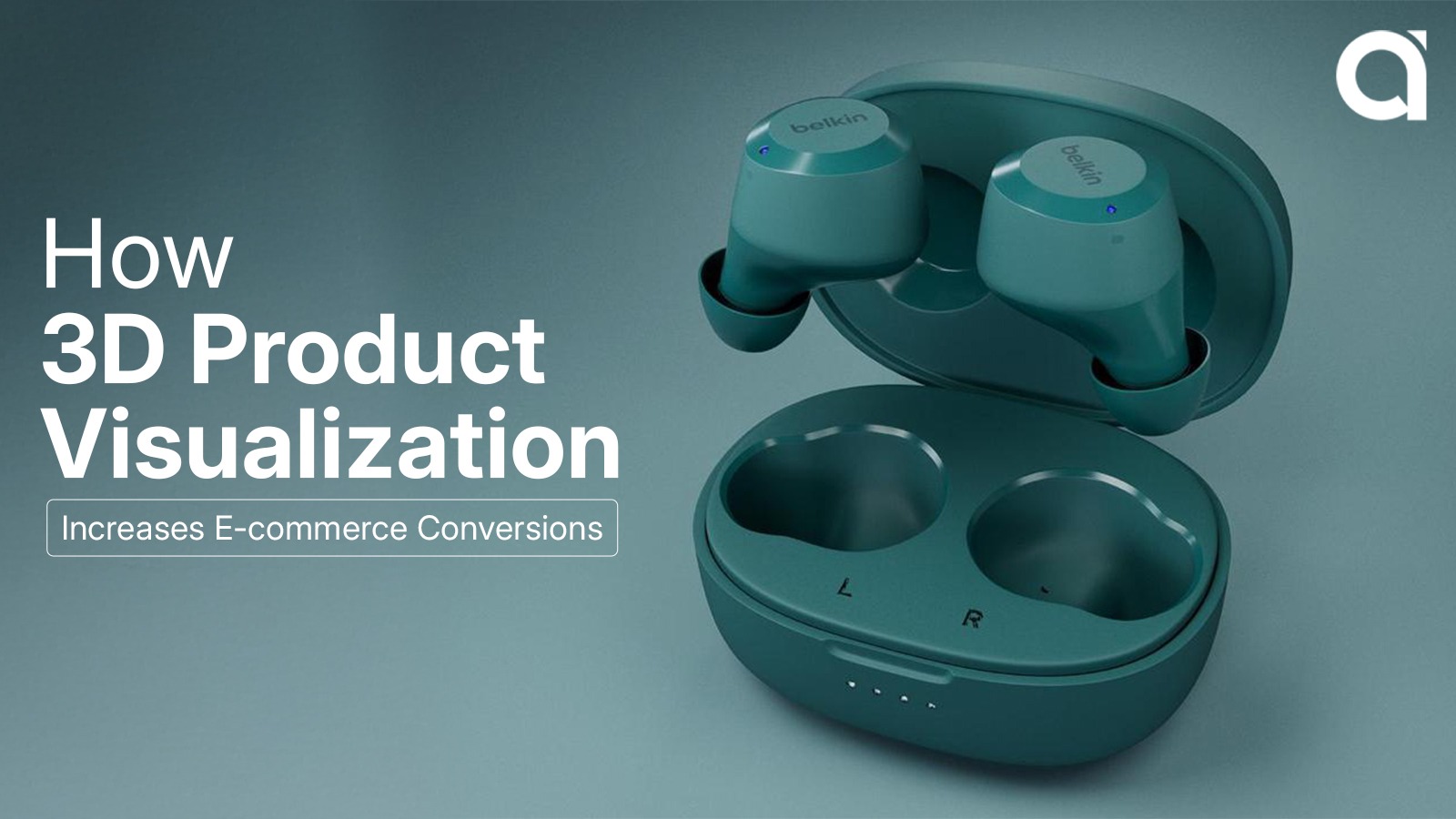
E-commerce has removed the physical store, but it has not removed buyer hesitation. Customers still want to inspect a product before they commit. They want to rotate it, zoom in, examine its texture, and imagine it in their own space. Static images struggle to provide that level of clarity.
This is where 3D visualization changes the equation. It gives shoppers control. It answers questions before they are asked. It reduces doubt at the most critical moment in the buying process.
For luxury fashion and premium retail brands, this shift is no longer experimental. 3D visualization for online stores has become a strategic tool to improve trust, reduce returns, and drive measurable growth.
The Conversion Problem in Traditional E-commerce
Most online stores rely on flat images. Even high-quality photography limits what a customer can see. You choose the angle. You choose the lighting. The buyer views only what you present.
This leads to friction between the buyer and the brand because they are not getting all the details of the products.
A customer might wonder:
- How does the fabric fall from the side?
- What does the clasp look like up close?
- How thick is the sole?
- Does the texture look smooth or grainy?
If the image does not answer these questions, hesitation grows. And hesitation lowers conversions.
Brands often try to solve this by adding more images. But more static photos still limit interaction. The shopper remains passive.
What 3D Product Visualization Actually Does
3D product visualization builds a digital replica of a product with precise dimensions, materials, and lighting behaviour. This replica is highly interactive, ensuring customers have an in-store experience from the comfort of their home.
An interactive 3D product display on PDPs (product display pages) gives shoppers the chance to:
- Rotate the product 360 degrees
- Zoom in for a close-up of the product
- View minute details from multiple angles
- Switch colours or variations instantly
This interactive experience builds the shopper’s confidence. It feels as if they are holding the product in real life. That major shift from passively viewing the product to actively exploring its most minute details makes a major difference in the overall shopping experience.
How 3D Product Visualization Increases Sales
The link between interaction and purchase is direct. When customers feel confident, they buy.
Here is how 3D product visualization increases sales in practical terms:
1. It Reduces Uncertainty
Uncertainty is the biggest barrier to conversion. When customers can inspect every detail, uncertainty drops. They feel informed, so they act faster.
2. It Increases Time on Page
Interactive 3D models keep shoppers engaged for a longer period of time. They are able to have an almost hands-on experience, since they can rotate, zoom, and compare the products. The more time a consumer spends exploring a product, the greater the chances of them buying it.
3. It Builds Perceived Value
Luxury brands depend on perceived value. Fine textures, stitching, finishes, and materials define that value. 3D visualization presents these details clearly, reinforcing quality. That’s why brands are able to improve e-commerce conversion rate with 3D models.
4. It Reduces Returns
Many returns happen because expectations do not match reality. Clear, interactive product views narrow that gap. Customers know what they are buying.
Brands that combine these effects improve their e-commerce conversion rate with 3D models to a great extent.
Benefits of 3D Product Visualization in E-commerce
The introduction of 3D product visuals has more benefits than one can count for e-commerce. Apart from conversions, they also impact operations, marketing, and scalability.
Visual Consistency
Traditional photography can vary between shoots. Lighting shifts. Angles change. Styles drift. 3D assets remain consistent across numerous campaigns, marketplaces, and regions.
Faster Content Production
Once a 3D asset exists, it is very easy for new angles, backgrounds, and formats to be generated without reshooting. This allows for faster launches and product updates.
Easy Customisation
With the use of 3D models, colour changes, material swaps, and seasonal variations can be created digitally. Brands no longer have to wait for digital samples to make product updates. What took weeks now takes a few days only!
Cross-Platform Use
The same 3D asset can power:
- Product detail pages (PDPs)
- Amazing AR experiences
- Social media content
- Marketplace listings
- Astonishing digital ads
The efficiency that 3D models provide significantly reduces the load on production and increases creative flexibility.
These are core benefits of interactive 3D product display for website that modern retail teams value.
3D Product Visualization vs Traditional Photography
Traditional photography still has value. It has the ability to capture raw human emotions and is still an excellent option for editorial storytelling. However, it has its limitations where scalable e-commerce operations are concerned.
Comparison between 3D Visuals and Traditional Photography:
- Traditional photography requires physical samples, while 3D models do not.
- Reshoots take time and budget. Digital updates do not.
For brands managing large catalogs or global distribution, this difference matters.
Why Brands Use 3D Product Visualization
The adoption trend is clear. It’s quite obvious. Many luxury brands have gone the route of integrating 3D visuals in their e-commerce strategy.
Why brands use 3D product visualization comes down to this:
- Speed – The production of faster product launches and updates.
- Control – Brands control everything from precise lighting to angles to materials.
- Scalability – One asset has the ability to support multiple channels and regions.
Retail teams also gain a performance edge. Interactive visuals support A/B testing. Brands can measure how 3D views affect click-through rates and add-to-cart actions.
This moves visual production from a creative expense to a performance lever.
3D Visualization for Online Stores at Scale
Global brands face another challenge: scale.
Product catalogues grow every season. Marketplaces demand specific formats. Regional sites require localised content.
3D Visualization for Online Stores simplifies this complexity. One master 3D asset can generate:
- Multiple resolutions
- Platform-specific crops
- Color variants
- AR-ready files
This supports global distribution without repeating production cycles.
Advertflair’s 3D Fluency infrastructure enables brands to operate at this level. With production teams in Chennai and Dallas and research leadership in New York, Advertflair delivers consistent output across markets and time zones.
Measuring Conversion Gains
Brands that add 3D product visuals to their PDPs often witness significant growth in:
- Add-to-cart rates
- Time spent on product pages
- Greatly reduced return rates
- Higher average order value
Results may vary by category, but the pattern remains consistent. The more clear a product is, the better the chance of buyers purchasing the item.
An interactive shopping experience makes shoppers feel as if they have ownership earlier on in the journey. That psychological shift increases the shopper’s interest in buying the product.
3D Product Visualization Services for Luxury E-commerce
Quality is non-negotiable for premium and luxury retail brands. That is why it is imperative that visuals reflect their craftsmanship and brand positioning.
Advertflair is an industry leader in 3D product visualization, especially for legacy brands and premium e-commerce. Its advanced software integrates highly-skilled digital modeling with proprietary systems such as AI for the apparel industry and AI for the jewellery industry.
The result is better than one can imagine. The photorealistic asset supports conversion and does not compromise on brand identity, thanks to Brand DNA.
Being one of the best 3D visualization agencies in the globe for e-commerce, Advertflair offers high-fidelity 3D modeling, interactive 3D product display integration, AR-ready assets, global production support, and more.
This approach makes 3D more than just a visual upgrade- it is a growth asset.
Today, the success of e-commerce depends on trust and clarity. Customers want to get an in-store shopping experience from the comfort of their own home.
The question is no longer whether 3D visualization works. The real question is how quickly brands adopt it as a core part of their online selling strategy.


